10 Mistakes New Concealed Carry Permit Holders Make
10 Mistakes New Concealed Carry Permit Holders Make
A concealed carry permit is not the same thing as training.
After teaching concealed carry classes, renewal classes, handgun fundamentals, and live-fire qualifications for years, I see the same problems over and over. Most students are responsible people trying to do the right thing. The problem is that many were never taught proper handgun handling before they started carrying.
Here are ten common mistakes new permit holders make — and why they matter.
A Permit Is Not Training
A concealed carry permit may allow you to carry legally, but it does not automatically make you safe, skilled, or prepared.
Carrying a handgun requires judgment, discipline, safe habits, and continued training.
-
Finger on the Trigger Too Early
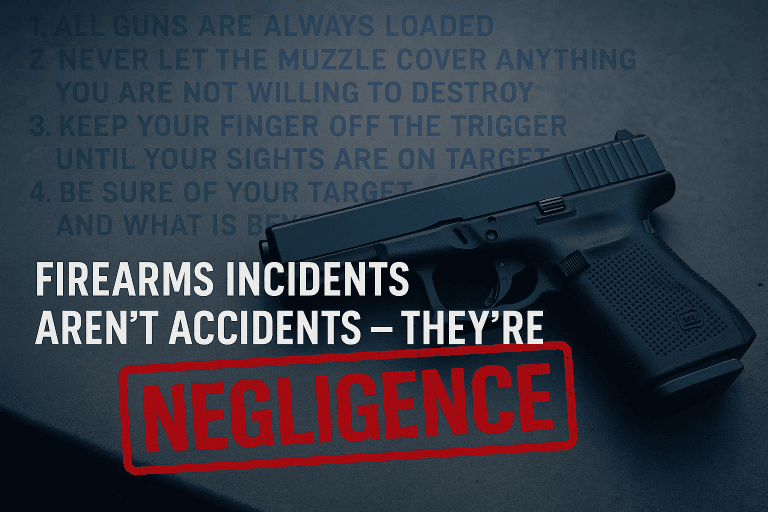
The trigger is not a handle. Your finger should stay indexed high on the frame until your sights are on target and you have made the decision to fire.
Many negligent discharges happen because the finger gets to the trigger before the mind has made a lawful and responsible decision.
-
Sweeping People with the Muzzle
Many students unintentionally point the muzzle at themselves, other students, instructors, or people in the next shooting lane while loading, unloading, casing, or uncasing a firearm. I teach the old circle of safety concept in my class.
This is why I teach that “down” is not always safe. A safe direction has to be thought through based on where you are and what is around you.
-
Failing to Remove the Magazine First
This is one of the most common unloading mistakes.
With a semi-automatic handgun, the proper unloading sequence matters:
- Finger off the trigger
- Muzzle in a safe direction
- Remove the magazine first
- Lock the slide open
- Inspect the chamber
- Inspect the magazine well
If you rack the slide first and leave the magazine in the gun, you may simply load another round into the chamber.
-
Holstering Too Fast
Nobody wins a prize for reholstering quickly.
Reholstering should be slow, deliberate, and controlled. Clothing, drawstrings, jacket material, or poor holsters can create real problems if they get into the trigger guard.
When the gun needs to go back in the holster, slow down. Look the gun into your holster.
-
Buying the Smallest Gun They Can Find
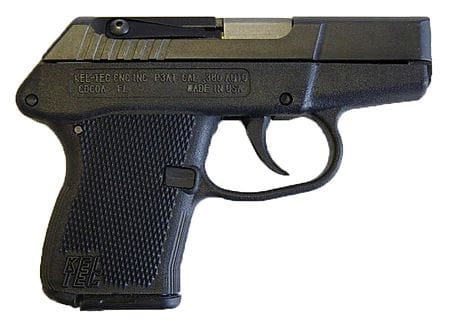
Small guns are easy to carry, but they are often harder to shoot well. Tiny pistols can be harder to grip, harder to rack, harder to aim, and less pleasant to practice with.
The smallest gun is not always the best carry gun. Choose a handgun you can safely load, unload, rack, clear, holster, and shoot accurately.
-
Treating the Gun Like a Communication Tool
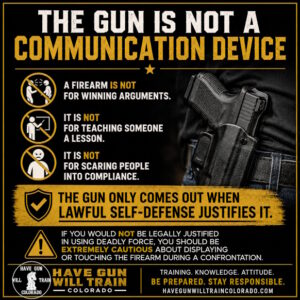
A firearm is not for winning arguments. It is not for teaching someone a lesson. It is not for scaring people into compliance.
The gun only comes out when lawful self-defense justifies it.
If you would not be legally justified in using deadly force, you should be extremely cautious about touching, showing, or displaying the firearm during a confrontation.
The Gun Is Not a Communication Device
Do not show it to win an argument.
Do not touch it to make a point.
Do not display it as a warning.
If you would not shoot, do not show.
-
Thinking Qualification Means Competence
Passing a required shooting qualification is not the same thing as being competent with a handgun.
Qualification usually shows that a student can meet a minimum standard under controlled conditions. Real competence includes safe gun handling, sound judgment, legal knowledge, equipment management, and continued practice.
-
Practicing the Wrong Things
Many New Concealed Carry Permit Holders go to the range and only practice slow shooting at a paper target. Marksmanship matters, but it is only one part of responsible carry.
Permit holders should also understand and practice:
- Loading and unloading
- Administrative gun handling
- Safe holstering
- Safe storage
- Malfunction clearance
- Drawing only under proper supervision
- Legal decision-making
-
Using Poor Holsters
A bad holster can create serious safety problems.
A proper holster should:
- Cover the trigger guard completely
- Hold the firearm securely
- Allow a full firing grip
- Stay open when the firearm is removed
- Fit the specific handgun being carried
Soft, loose, collapsing, or poorly fitted holsters can make safe carry more difficult.
-
Not Continuing Their Training
Getting the permit should not be the end of training. It should be the beginning.
Firearms skills are perishable. Judgment needs development. Laws change. Equipment changes. Your ability changes over time.
A responsible permit holder keeps learning.
Learn the Skills Behind Safe Carry
These mistakes are exactly why Have Gun Will Train Colorado developed the Primary Handgun Skills course.
This 2.5-hour class is designed for permit holders who already carry, but were never properly taught safe loading, unloading, clearing, holstering, muzzle discipline, and trigger finger discipline.
Final Thought
Most New Concealed Carry Permit Holders are not careless people. They simply have gaps in their training.
The problem is that firearms do not forgive bad habits. Finger discipline, muzzle discipline, safe loading and unloading, holster safety, and sound judgment matter every time you carry.
A permit gives you permission. Training gives you ability.
Additional Firearms Safety Resources
- NRA Gun Safety Rules — basic firearm safety rules every gun owner should know.
- Project ChildSafe — firearm storage and safety information for responsible gun owners.
- NSSF Firearms Safety Resources — safety information from the National Shooting Sports Foundation.
Related Training
Popular Training Courses
About Have Gun Will Train Colorado
Have Gun Will Train Colorado is Southern Colorado’s full-time firearms training school. Since 2010, Rick Sindeband has trained thousands of students in concealed carry, handgun fundamentals, firearm safety, and defensive handgun skills.
Our goal is simple: help responsible gun owners build safe habits, develop practical skills, and understand the responsibilities that come with carrying firearms.
Get Trained the Right Way
If you have a concealed carry permit but never learned the fundamentals of safe handgun handling, it is time to fix that.