Proper Handgun Grip Fundamentals | Improve Accuracy & Recoil Control
Proper Handgun Grip Fundamentals
Improve Accuracy • Control Recoil • Build Better Shooting Habits
A proper handgun grip is one of the most important skills a shooter can develop. Bad grip habits reduce accuracy, increase recoil, slow follow-up shots, and can even create safety problems.
At Have Gun Will Train Colorado, we spend a lot of time correcting grip problems with handgun grip fundamentals- because many shooters unknowingly practice outdated or ineffective techniques.

Why Your Shooting Grip Matters
When a handgun fires, recoil begins immediately — before the bullet even exits the barrel. A poor grip allows the handgun to shift, twist, or rise excessively during recoil. That movement makes accurate shooting slower and more difficult.
A strong and consistent grip helps:
- Improve accuracy
- Reduce muzzle rise
- Speed up follow-up shots
- Improve recoil recovery
- Create safer gun handling habits
- Build consistency under stress
One of the biggest problems I see at the range is shooters constantly readjusting their grip after every shot. Once the gun settles firmly into your hands, changing your grip between shots often makes recoil control worse.
The Old “Cup and Saucer” Grip

Many shooters still use the old “cup and saucer” grip. This technique has largely disappeared from reputable firearms instruction because it provides poor recoil management and weak support-hand control.
With this grip, the support hand simply rests underneath the shooting hand instead of actively controlling the handgun. The result is usually more muzzle rise, slower recovery, and reduced control.
Modern instructors and competitive shooters overwhelmingly use a thumbs-forward grip because it places more hand contact on the pistol and creates significantly better recoil control.
Step 1 — High Grip on the Backstrap

With your dominant hand, place the web of your hand as high as possible on the handgun backstrap without interfering with slide movement.
The handgun should line up naturally with the bones in your forearm. A high grip reduces leverage during recoil and helps control muzzle rise.
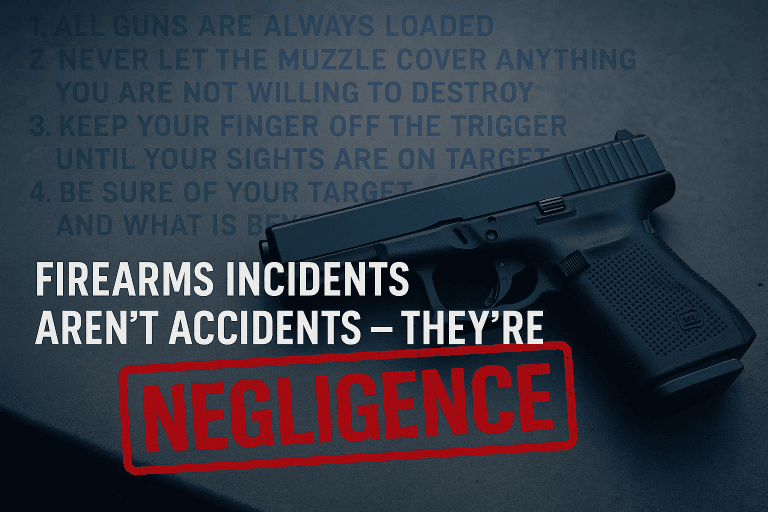
Keep your trigger finger straight and indexed along the frame until you are on target and ready to fire.
This is also one of the most common safety violations seen on public ranges — fingers entering the trigger guard too early.
Step 2 — Fill the Open Space

Once your dominant hand is in position, you will notice exposed space on the grip panel. That open area is where the heel of your support hand belongs.
Your support hand should aggressively fill that empty space to maximize contact with the handgun.
More skin contact generally equals more recoil control.
Step 3 — Wrap and Lock the Support Hand

Your support-hand fingers should wrap around the fingers of your dominant hand.
The support hand should apply firm rearward pressure while both wrists remain locked and stable.
Most shooters do not use enough support-hand pressure. Proper support-hand engagement is one of the keys to controlling recoil efficiently.
Final Grip Position
When properly positioned, both thumbs should generally point toward the target and remain roughly parallel.
Your wrists should stay locked, your grip pressure should remain consistent, and the handgun should track predictably during recoil.
A proper thumbs-forward grip helps shooters:
- Recover sights faster
- Improve shot-to-shot consistency
- Reduce unnecessary movement
- Shoot more accurately under stress
- Control recoil more efficiently
Common Handgun Grip Fundamentals Mistakes
- Using the outdated cup and saucer grip
- Holding the handgun too low on the backstrap
- Weak support-hand pressure
- Unlocked wrists during recoil
- Crossing thumbs behind the slide
- Trigger finger is entering too early
- Regripping after every shot
- Allowing gaps between the hands and the pistol grip
Grip Matters Even More for Concealed Carry
If you carry a concealed handgun, your shooting grip becomes even more important.
When the handgun leaves the holster during a defensive draw, you are largely committed to the grip you established during the draw stroke. Poor grip acquisition slows accurate shooting and increases the chances of fumbling the handgun under stress.
That is why proper training and repetition matter. Practicing bad technique simply reinforces bad habits.
Build Better Shooting Habits
A proper handgun grip improves recoil control, accuracy, safety, and confidence. Unfortunately many shooters spend years practicing bad habits without realizing it.
At Have Gun Will Train Colorado, students learn practical shooting fundamentals including grip, trigger control, recoil management, concealed carry techniques, and safe firearms handling.
Serving Pueblo and Southern Colorado since 2010
Continue Building Your Shooting Skills
Proper grip is only one part of becoming a safe and effective shooter. These additional articles and training programs can help you continue improving your skills.
Learn To Shoot
New shooters need proper fundamentals from the beginning to avoid building bad habits.
Handgun Fundamentals
Develop practical handgun skills including grip, trigger control, recoil management, and safe gun handling.
Dry Fire Training
Learn how proper dry fire practice can improve your shooting skills without wasting ammunition.
Practice vs Training
Understand the difference between practicing correctly and accidentally reinforcing bad habits.