Administrative Gun Handling | Loading, Unloading & Firearm Safety

Administrative Gun Handling: Where Most Firearms Incidents Happen
Administrative gun handling is everything you do with a firearm when you are not actually shooting it.
That includes loading, unloading, clearing, cleaning, transporting, holstering, unholstering, casing, uncasing, and storing a firearm.
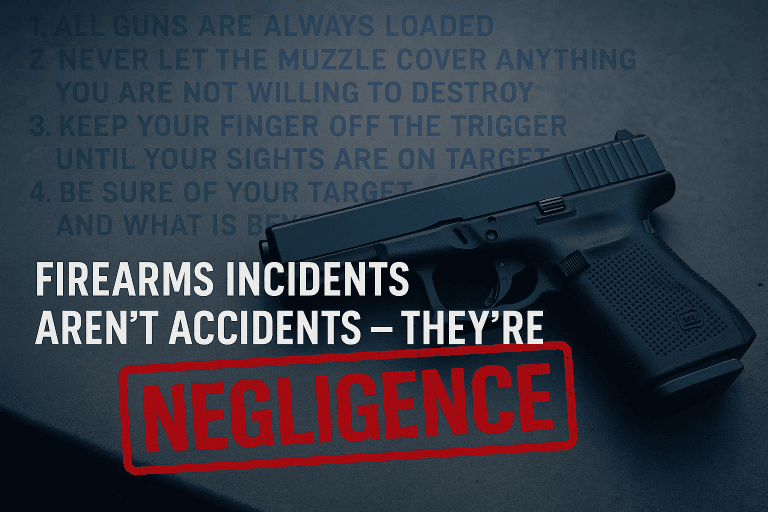
This is where many preventable firearms incidents happen. Not during the actual shot. Not while aiming at the target. Most problems occur when people are handling guns casually, carelessly, or without proper training.
Administrative Handling Is Not Casual Handling
Loading, unloading, clearing, holstering, and transporting a handgun are serious gun handling skills. These are not side issues. They are core safety skills every gun owner should know.
If you carry a handgun, you need to know how to handle it safely before, during, and after shooting.
What Is Administrative Gun Handling?
Administrative gun handling means handling a firearm for a purpose other than firing it. Examples include:
- Loading a handgun
- Unloading a handgun
- Clearing a firearm
- Checking firearm condition
- Cleaning a handgun
- Transporting a firearm
- Putting a gun in a case
- Removing a gun from a case
- Holstering and unholstering
- Placing a gun on a bench or table
These tasks sound simple, but this is exactly where poor muzzle discipline, trigger finger problems, and unsafe habits show up.
Loading and Unloading a Handgun
Many people were never properly taught how to load and unload a handgun. They twist the gun sideways, turn their body, rack the slide from left to right, or point the muzzle in unsafe directions while trying to manipulate the gun.
That may not seem like a big deal until you realize the muzzle may be covering the person in the next shooting lane, someone standing next to you, or something you never intended to destroy.
Safe unloading should follow a consistent process:
- Keep the muzzle in a safe direction.
- Keep your finger off the trigger.
- Remove the magazine first.
- Lock the slide open.
- Visually inspect the chamber.
- Physically inspect the chamber when appropriate.
- Verify the magazine well is empty.
If someone cannot safely load, unload, and clear their handgun, they need training before relying on that firearm for concealed carry or home defense.
Cleaning a Handgun Safely
Cleaning a firearm is another common place where negligent discharges happen. The problem usually starts before the cleaning begins.
The firearm was not properly cleared.
Before cleaning any handgun:
- Remove all ammunition from the cleaning area
- Remove the magazine
- Lock the slide open
- Inspect the chamber visually and physically
- Inspect the magazine well
- Keep the muzzle in a safe direction
- Keep your finger off the trigger
If you clear the firearm correctly, remove ammunition from the area, and maintain muzzle and trigger finger discipline, the risk drops dramatically.
Transporting a Gun
Transporting a firearm in a vehicle, bag, purse, backpack, or case is still administrative gun handling.
A handgun should not be loose where objects can enter the trigger guard. Pens, keys, straps, clothing, and other items can create problems if the gun is not properly secured.
A proper holster should:
- Cover the trigger guard completely
- Retain the firearm securely
- Allow a full firing grip
- Stay open when the gun is removed
- Prevent accidental access to the trigger
A properly holstered or properly cased handgun is much safer than a loose handgun floating around in a vehicle, purse, or bag.
Holstering and Unholstering
Holstering and unholstering are serious gun handling skills. Many people assume they can learn this on their own, but poor draw habits can become dangerous very quickly.
Common holster-related problems include:
- Finger moving to the trigger too early
- Clothing entering the holster
- Rushing the reholster
- Muzzle covering the body
- Using poor quality holsters
- Practicing from unsafe carry positions without supervision
There is no reason to speed reholster. If the gun needs to go back in the holster, slow down, look the gun into the holster when appropriate, and keep the finger indexed away from the trigger.
Why “Down” Is Not Always Safe
Many students are told to keep the gun pointed down. That may sound simple, but “down” is not automatically safe.
In a classroom, parking lot, home, vehicle, or public range, pointing a gun down may mean pointing it at concrete, feet, legs, plumbing, another floor, or an unknown area below you.
A safe direction must be thought through. It is not just a slogan.
Most Problems Come From Two Bad Habits
Most administrative gun handling problems come from two simple failures:
- Poor muzzle discipline
- Poor trigger finger discipline
If the muzzle stays in a safe direction and the finger stays off the trigger, many dangerous situations are prevented. Add proper loading and unloading procedures, and the risk drops even more.
Primary Handgun Skills
This is exactly why Have Gun Will Train Colorado developed the Primary Handgun Skills course.
Many people already have a concealed carry permit but were never taught how to safely handle, load, unload, clear, holster, and transport their handgun.
Administrative Handling Checklist
- Keep the muzzle in a safe direction
- Keep your finger indexed off the trigger
- Remove the magazine before clearing
- Lock the slide open when possible
- Inspect the chamber
- Inspect the magazine well
- Use a proper holster or case
- Do not handle firearms unnecessarily
- Slow down when holstering
- Get training before practicing advanced skills
Additional Firearms Safety Resources
- NRA Gun Safety Rules — basic firearm safety rules every gun owner should know.
- Project ChildSafe — firearm storage and safety information for responsible gun owners.
- NSSF Firearms Safety Resources — safety information from the National Shooting Sports Foundation.
Editor’s Note
This article was originally published in 2020 and has been extensively updated in 2026 to reflect current firearms training practices, administrative gun handling concepts, and the development of the Primary Handgun Skills program.
Related Training
Popular Training Courses
About Have Gun Will Train Colorado
Have Gun Will Train Colorado is Southern Colorado’s full-time firearms training school. Since 2010, Rick Sindeband has trained thousands of students in concealed carry, handgun fundamentals, firearm safety, and defensive handgun skills.
Our goal is simple: help responsible gun owners build safe habits, develop practical skills, and understand the responsibilities that come with handling and carrying firearms.
Get Trained the Right Way
Safe gun handling is not optional. If you carry a handgun, learn how to handle it properly.