Brandishing in Colorado | Displaying a Gun & Menacing Charges
‘Brandishing in Colorado: When Displaying a Gun Can Get You Charged
Colorado may not use the word “brandishing” as a stand-alone crime, but displaying a firearm the wrong way can still lead to serious criminal charges.
Is Brandishing Illegal in Colorado?
People use the word brandishing all the time, but Colorado does not commonly use a stand-alone criminal statute called “brandishing.”
That does not mean you are safe just because that word is missing from the statute book.
In Colorado, displaying or presenting a firearm during a confrontation can lead to charges such as disorderly conduct or menacing, depending on what happened, how it happened, and how the other person perceived the threat.
The Charges People Should Understand
Disorderly Conduct
Disorderly conduct can apply when a person displays a real or simulated firearm in a public place in a manner calculated to alarm, and that display does alarm another person.
You may not have to fire the gun or even point it directly at someone to create a legal problem.
Menacing
Menacing involves knowingly placing, or attempting to place, another person in fear of imminent serious bodily injury by threat or physical action.
When a firearm or simulated firearm is involved, the charge can become much more serious.
“I Only Showed the Gun” May Not Save You
Many armed citizens misunderstand this issue. They think:
- “I only showed the gun.”
- “I never fired.”
- “I did not point it directly at him.”
Those facts do not automatically protect you. If your actions caused another person to fear imminent serious bodily injury, law enforcement and prosecutors may look closely at menacing or other criminal charges.
If You Draw Your Gun, You Had Better Be Able to Explain Why
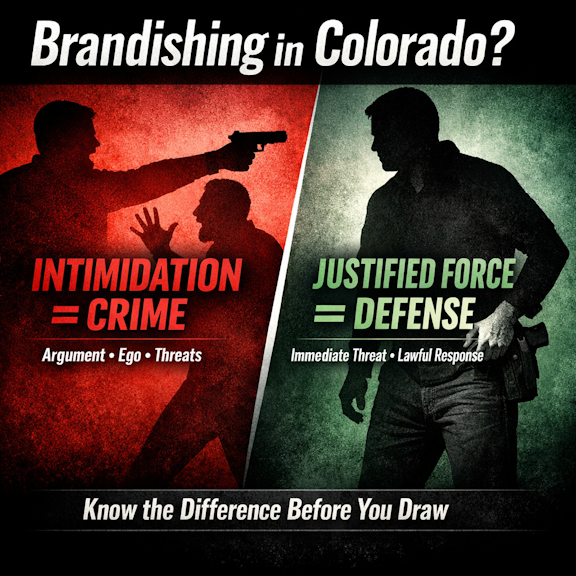
A defensive handgun is not a magic intimidation tool. It is not there to win arguments, stop rude behavior, settle road rage, or help you “take control” of a tense situation.
If you draw a firearm in a confrontation, expect your actions to be judged afterward by law enforcement, prosecutors, witnesses, cameras, and the totality of the circumstances.
You need to be able to clearly explain:
- What threat you faced
- Why you believed the threat was immediate
- Why displaying or drawing the firearm was necessary
- Why your actions were reasonable under the circumstances
Bad Draws Get Good People Charged
One of the biggest training failures in the gun world is teaching people how to carry without teaching them when they can legally present the gun.
That is how people end up charged over ego, panic, parking lot arguments, road rage, and foolish attempts to “warn” somebody by flashing a pistol.
If the facts do not support lawful self-defense, drawing the gun may become the crime.
Get Trained Before You Guess Wrong
Reading about Colorado gun law is a start. Training helps you understand how the law, decision-making, and safe gun handling come together in real life.
What About Self-Defense?
There are situations where presenting or using a firearm may be legally justified. But that depends on the facts, not internet talk, barbershop legal advice, or what somebody says they would do.
Colorado self-defense cases turn on details. Timing, distance, words, actions, witness statements, whether the danger was immediate, and whether your response was reasonable all matter.
That is why serious gun owners need serious training, not fantasy talk.
Bottom Line on Brandishing in Colorado
Colorado may not use the word “brandishing” as a stand-alone criminal label, but displaying a firearm the wrong way can still get you arrested.
If you alarm others in public, you may be looking at disorderly conduct. If your threat or actions place someone in fear of imminent serious bodily injury, you may be looking at menacing.
Don’t draw your firearm to bluff. Never display it to win an argument. Do not assume “I never fired” means “I did nothing wrong.”
Brandishing in Colorado – FAQ
Is brandishing a crime in Colorado?
No. Colorado does not have a specific “brandishing” statute. However, displaying a firearm can lead to charges such as disorderly conduct or menacing, depending on the situation.
Can you show a gun without pointing it in Colorado?
Possibly, but it depends on context. If displaying the firearm alarms another person or is used to intimidate, it may qualify as disorderly conduct or even menacing.
What is the difference between brandishing and menacing in Colorado?
“Brandishing” is a general term. Menacing is a specific crime involving placing someone in fear of imminent serious bodily injury. If a firearm is involved, menacing can become a felony.
Can drawing a gun during an argument get you arrested?
Yes. Drawing a firearm to intimidate or control a situation without legal justification can result in criminal charges in Colorado.
Is displaying a firearm in self-defense always legal?
No. It must be justified under Colorado self-defense law. If the threat is not immediate and serious, displaying the firearm may be unlawful.
Take the Next Step — Train the Right Way
Reading is a start. Training builds real skill and better judgment.
You May Also Want to Read
Disclaimer: This page is for educational purposes only and is not legal advice. For legal advice on a specific incident, consult a qualified Colorado attorney.