Proper Concealed Carry Holster: 4 Safety Criteria | HGWTC
Proper Concealed Carry Holster: 4 Things I Look For
A holster isn’t just something that holds your handgun. When you carry a firearm for self-defense, the holster becomes part of your safety equipment.
I see a lot of holsters in firearms classes.
Some are excellent. Some are adequate for what the owner intends to do with them. And some simply aren’t appropriate for carrying and drawing a defensive handgun.
One of the things I regularly discuss with students is what makes a proper concealed carry holster. It sounds like a simple question, but the answer depends partly on what you’re asking the holster to do.
A holster isn’t automatically good or bad because of what it’s made from, what it costs or where you bought it.
The first question should be: What is the job?
Start With the Job
Before deciding whether a holster is appropriate, ask what you’re actually going to use it for.
A concealed carry holster and a holster used inside a backpack or range bag don’t necessarily have the same job.
A soft or universal holster may be useful for protecting a handgun during transport. It can help keep the handgun covered and protected while it’s inside a range bag, backpack or another appropriate container.
There are also ranges where a holstered handgun can be used as a safe means of moving the firearm from one location to another when range rules permit it.
That’s a legitimate use for a holster.
But once we’re talking about wearing a handgun on the body for concealed carry—and especially drawing and reholstering that handgun—the criteria change.
Different jobs require different equipment.
Gun Stores Will Sell You What They Have
A lot of new gun owners buy their first holster at the same time they buy their handgun.
That makes sense. You just bought the gun, you’re standing in a gun store and you need something to carry it in.
But remember: Gun stores will sell you what they have.
That doesn’t mean the gun store is intentionally trying to sell you a bad holster. Their choices are limited to what’s hanging on the wall or sitting in the display case.
Think about the number of handguns available today. Then add different barrel lengths, optics, weapon lights, inside-the-waistband carry, outside-the-waistband carry and different carry positions.
No gun store can reasonably stock every holster for every handgun in every possible configuration.
That’s one reason new gun owners sometimes leave with a universal or one-size-fits-several holster. If you look at the back of some holster packages, you’ll see a list of different handguns that supposedly fit the same holster.
That should tell you something.
The fact that your handgun fits inside a holster doesn’t necessarily make it the right holster for concealed carry.
Don’t Buy a Holster Just to Come to Class
This is important, especially for new shooters.
You do not need to go buy a holster just because you’re coming to one of my classes.
If you already own a holster, bring what you have. We can look at it and talk about what it does well, what its limitations may be and whether it makes sense for what you intend to do with it.
If you haven’t purchased one yet, that’s okay too.
In many cases, I’d rather have a new gun owner learn the criteria for a proper concealed carry holster before spending money on one.
Learn first. Buy second. Buying the wrong holster twice doesn’t save any money.
My Four Criteria for a Concealed Carry Holster
When I’m evaluating a holster intended for carrying and drawing a defensive handgun, there are four basic things I’m looking for.
1. It Allows a Full Firing Grip
You should be able to establish a complete firing grip on the handgun while it is still in the holster.
This is an important part of the draw and presentation. The grip you establish before the handgun comes out of the holster should be the grip you use throughout the presentation.
I don’t want to see someone pull the gun halfway out and then try to rearrange their hand to get a better grip.
If the holster interferes with your fingers or prevents you from obtaining a proper grip, you’re starting the draw with a problem.
2. It Protects the Trigger and Trigger Guard
When the handgun is properly seated in the holster, I want the trigger and trigger guard protected.
I don’t want fingers, clothing, straps, drawstrings or other objects getting into the trigger guard while the handgun is holstered.
This is one of the most important safety functions of a concealed carry holster.

A carry holster should properly secure the handgun and protect the trigger area.
3. It Provides Adequate Retention
The handgun needs to stay in the holster until you deliberately remove it.
Walking, bending, getting in and out of a vehicle and normal physical activity shouldn’t cause your handgun to come out of the holster.
You should also consider what might happen during more strenuous movement. If you had to run, fell down or ended up struggling with someone, you don’t want your handgun simply falling out.
At the same time, retention shouldn’t be so excessive that you can’t deliberately draw the handgun when you need it.
Some holsters accomplish retention through their shape and fit. Others use adjustable retention or an active retention system. Companies such as Safariland offer examples of holsters using different retention systems.
The important question is whether the handgun stays where it belongs until you deliberately remove it.
4. It Doesn’t Collapse
Once the handgun has been drawn, a carry holster should maintain its shape.
I want to be able to deliberately return the handgun to the holster without using my other hand to hold the holster open.
Some soft or sticky-style holsters collapse after the handgun is removed. Again, that doesn’t necessarily make them useless. They may work fine for another purpose.
But if I’m repeatedly drawing and reholstering during training, a collapsing holster creates a problem.
Reholstering is not a race.
Nobody ever won a prize for being the fastest person to put a handgun back into the holster. Take your time. Make sure clothing and other objects are clear, and deliberately return the handgun to the holster.
Are Universal and Soft Holsters Bad?
Not necessarily.
This is why I started this discussion by asking what job the holster is supposed to perform.
A soft or universal holster can have a legitimate purpose. It may provide protection for a handgun while it’s being transported in a range bag, backpack or another container.
What I don’t want people to do is assume that because a holster is useful for transporting a handgun, it automatically meets my criteria for carrying and drawing a defensive handgun.
A backpack holster and a concealed carry holster have different jobs. I don’t necessarily judge them by the same criteria.
Kydex or Leather?
Both can work very well.
Kydex is popular because it can be molded specifically around a particular handgun. A model-specific Kydex holster can provide good trigger protection, retention and a consistent opening for reholstering. Manufacturers such as Vedder Holsters are examples of companies producing model-specific Kydex holsters.
Leather holster makers have been honing their craft for generations. A quality leather holster can also be molded to a specific handgun and provide excellent service.
I’m less concerned about whether the holster is plastic or leather than I am about whether it performs its intended job safely.
Four questions to ask:
- Can I obtain a full firing grip?
- Is the trigger and trigger guard protected?
- Does the holster properly retain the handgun?
- Does the holster maintain its shape?
Eventually, Everybody Has a Box of Holsters
Talk to somebody who has carried a handgun for self-defense for many years and there’s a pretty good chance they have a box, drawer or shelf full of holsters they’ve tried and stopped using.
Sometimes they changed handguns. Sometimes their method of carry changed. Sometimes the holster was uncomfortable.
And sometimes they bought something before they really understood what they needed.
You may never completely avoid the box of holsters, but understanding what you’re looking for before you buy can certainly make the box smaller.
Your Gun and Holster Are a System
Your handgun, your holster and the way you carry the gun all work together.
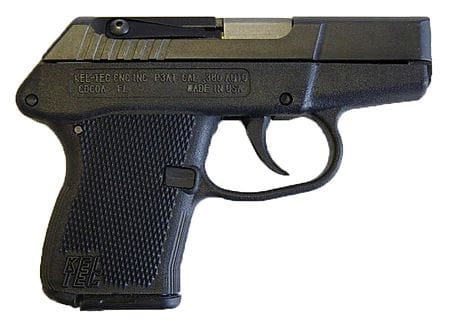
This becomes especially important with very small concealed carry handguns. A small handgun may be convenient to carry, but its size can also make it more difficult to grip, manipulate and shoot well.
If you’re considering a very small handgun for concealed carry, you may also want to read Small Guns for Concealed Carry: Are Pocket Pistols a Good Choice?
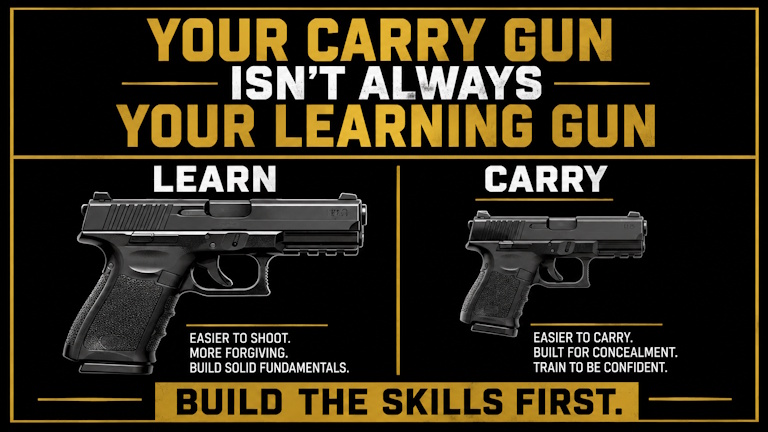
And remember that the gun that’s easiest to carry isn’t necessarily the easiest handgun to learn on.
A Holster Is Safety Equipment
A proper concealed carry holster isn’t simply something that keeps your handgun attached to your belt.
It’s part of your safety equipment.
For a handgun I’m going to carry and draw, I want a holster that allows a full firing grip, protects the trigger, provides appropriate retention and maintains its shape.
Those are the criteria I teach.
But don’t confuse those requirements with saying that every other type of holster is useless. A holster used for transport inside a backpack or range bag has a different job.
Match the equipment to the job.
Don’t Let Equipment Keep You From Training
If you’re new to concealed carry, you don’t need to have everything figured out before coming to class.
Bring the equipment you already have. If you don’t own a holster yet, that’s okay too.
We can talk about what works, what doesn’t, and what makes sense for the handgun and the way you intend to carry it.
Learn what you need before you spend your money.
Have Gun Will Train Colorado has been providing firearms training in Pueblo and Southern Colorado since 2010.